

Hard-To-Find Components
Finding rare or discontinued aircraft parts can slow down operations and increase downtime. We help you locate hard-to-source components through our trusted global network of suppliers. If it exists, we’ll help you find it.
Our team actively searches across verified partners, surplus inventories, and international markets to track down the parts you need. We understand how urgent AOG situations can be, and we move quickly to provide realistic availability and clear lead times.
Every sourced component goes through proper documentation review to ensure traceability and compliance. From legacy aircraft parts to limited-production components, we focus on accuracy, reliability, and fast response — so your aircraft can return to service with minimal delay.
Industry Trends & Market Analysis
Industry Expert Opinions
Explore our latest articles on emerging aviation technologies, parts supply chain shifts, and business aviation growth. Our expert contributors break down complex topics, making them easy to understand and apply.

Aviation Aftermarket Insights
Aviation Industry Updates
- Growth in the Aviation Aftermarket
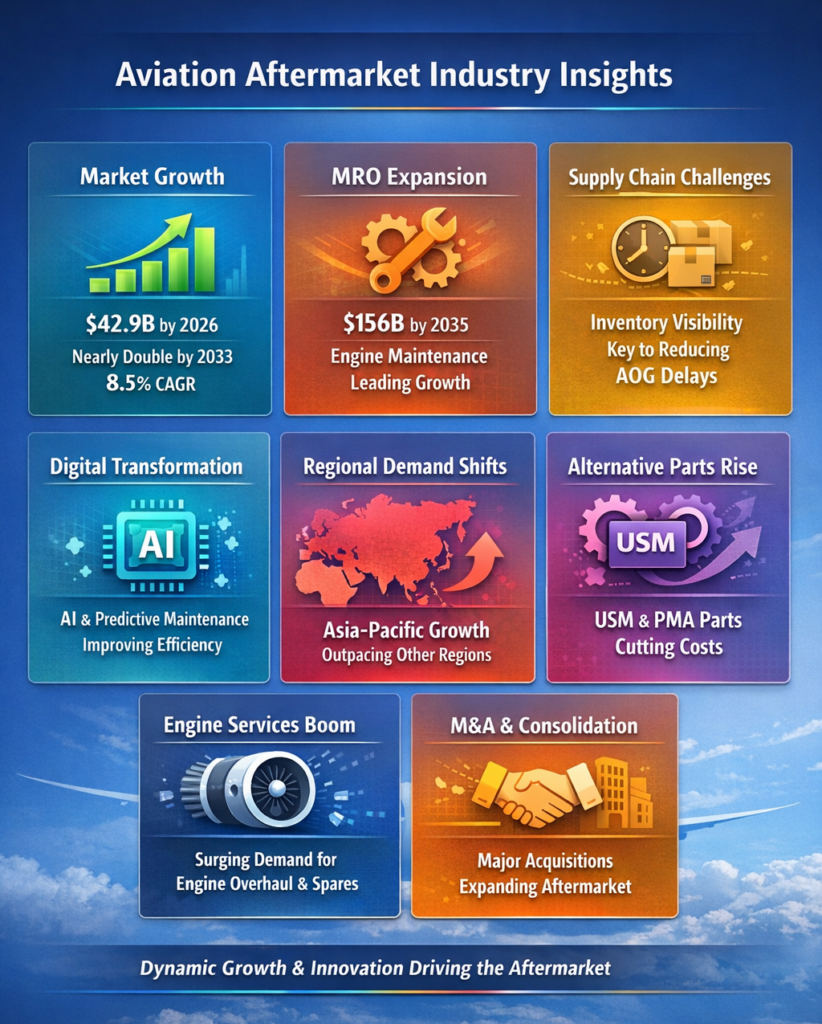
The market for aircraft parts is booming. It’s expected to hit $42.9 billion by 2026, almost doubling by 2033. This growth is driven by demand for engines, airframes, and avionics, both in commercial and business aviation. -
How Digital Tools Are Changing Aircraft Parts
Technology is transforming how we buy and sell aircraft parts. AI, predictive maintenance, and digital tools help businesses plan better, avoid downtime, and connect more easily online. With real-time inventory, it’s easier than ever to get the right parts when you need them. -
Shifts in Regional Demand
We’re seeing big changes in where aircraft parts are needed. North America still leads, but the Asia-Pacific region is growing fastest. New fleets and routes in these markets will shape demand for years to come. -
Finding Hard-to-Find Parts
We know it can be tough to find rare or discontinued aircraft parts. That’s where we come in. At Aviatrading, we specialize in tracking down those hard-to-find components, so you don’t have to wait or risk costly downtime. -
Trends Toward Sustainable Aviation
Sustainability is becoming a bigger focus in aviation. We’re seeing more fuel-efficient aircraft, electric designs, and greener materials. These trends are shaping the future of how we fly.
Market Trends and Aircraft Aftermarket Analysis
The aviation industry is one of the most dynamic and resilient sectors in the global economy. While aircraft orders and passenger growth often make headlines, the true engine of long-term stability lies in the aircraft aftermarket. From spare parts and component repairs to engine overhauls and digital sourcing platforms, the aftermarket keeps fleets flying safely and efficiently every day.
In this article, we take a closer look at the latest aviation market trends and what they mean for the aircraft aftermarket sector.
The State of the Global Aviation Market
Commercial aviation has fully transitioned from recovery mode into growth mode. Passenger demand has rebounded strongly across North America, Europe, and Asia-Pacific. Airlines are expanding routes, increasing frequencies, and investing in next-generation aircraft that offer better fuel efficiency and lower operating costs.
At the same time, global fleets are evolving. Many airlines are retiring older aircraft and introducing newer models such as the A320neo and 737 MAX families. However, older aircraft remain in service in many regions, especially in cargo operations and developing markets. This creates a unique dual demand: support for legacy fleets and parts supply for new-generation aircraft.
For the aftermarket, this is a powerful combination.
Why the Aircraft Aftermarket Matters More Than Ever
The aircraft aftermarket includes spare parts distribution, maintenance, repair and overhaul (MRO), engine services, component repair, and technical support. Unlike aircraft sales, which are cyclical, the aftermarket benefits from recurring demand. Every flight cycle generates wear and tear. Every aircraft requires inspections, replacements, and technical care.
Several key forces are shaping the aftermarket today:
1. Higher Aircraft Utilization
Aircraft are flying more frequently again. Increased flight cycles mean more maintenance events, more component replacements, and greater demand for reliable parts supply.
2. Aging Aircraft in Service
While new aircraft are entering fleets, many operators continue flying mature platforms. Older aircraft require more frequent maintenance checks and part replacements, creating steady demand for used serviceable material (USM) and cost-effective aftermarket solutions.
3. Supply Chain Adjustments
The aviation industry continues to adapt to global supply chain disruptions. Longer OEM lead times have pushed operators to diversify sourcing strategies. Many airlines and MRO providers now combine OEM parts, approved aftermarket components, and USM to maintain operational continuity.
4. Digital Transformation
The aftermarket is becoming increasingly digital. Data-driven inventory management, predictive maintenance tools, and online marketplaces are improving sourcing efficiency and reducing downtime.
CORE SEGMENTS OF THE AIRCRAFT AFTERMARKET
Spare parts remain the backbone of the aftermarket. Demand spans OEM components, PMA parts, and USM. Operators are prioritizing availability, traceability, and fast turnaround times. Cost control remains critical, particularly for regional and cargo operators.
Maintenance, Repair and Overhaul (MRO)
MRO services continue to expand globally. Airlines are outsourcing more maintenance to specialized providers to reduce capital expenditure and improve operational flexibility. Emerging MRO hubs in Asia and the Middle East are gaining strategic importance.
Component Repair and Overhaul
Rather than replacing entire units, airlines increasingly repair and overhaul components. Specialized shops handle avionics, hydraulics, landing gear, and other high-value systems. This approach reduces costs and extends asset life cycles.
Engine Aftermarket
Engines represent one of the largest and most valuable segments of the aftermarket. Overhaul events are expensive but predictable. Long-term service agreements, including power-by-the-hour models, are becoming standard practice to manage costs and risk.
Pricing, Inventory and Operational Challenges
Despite strong demand, the aftermarket faces several challenges:
-
Inventory balancing: Holding too much stock ties up capital; holding too little risks AOG situations.
-
Certification requirements: Strict regulatory compliance (FAA, EASA, TCCA and others) increases documentation and quality control complexity.
-
Lead times: Some high-demand parts still face extended production timelines.
-
Geopolitical considerations: Trade restrictions and export regulations can impact cross-border transactions.
Companies that invest in compliance systems, supplier diversification, and transparent documentation processes gain a competitive advantage.
Technology Is Reshaping the Aftermarket
Digital innovation is no longer optional. Predictive maintenance systems now analyze flight data to anticipate failures before they happen. This reduces unscheduled downtime and improves fleet reliability.
Online parts marketplaces and digital inventory platforms improve visibility and speed. Buyers can compare availability, certification status, and pricing in real time. Transparency and traceability are becoming market standards rather than differentiators.
Advanced analytics tools also help optimize inventory forecasting, ensuring the right part is available at the right time.
Sustainability and the Future of Aviation Support
Sustainability is influencing purchasing decisions across the aviation ecosystem. Airlines are investing in fuel-efficient aircraft and retrofits, while aftermarket providers are exploring environmentally responsible repair processes and energy-efficient facilities.
Used serviceable material also contributes to sustainability goals by extending component life cycles and reducing manufacturing demand.
Looking ahead, alternative propulsion systems and electric aircraft concepts will gradually introduce new maintenance models. While these technologies are still developing, forward-thinking aftermarket companies are already preparing for change.
Competitive Landscape: OEM vs Independent Suppliers
The aftermarket includes both OEM-backed services and independent suppliers.
-
OEMs provide original parts, technical support, and guaranteed reliability, often at premium pricing.
-
Independent distributors and repair organizations offer competitive pricing, flexible sourcing, and faster delivery in many cases.
-
USM suppliers play a crucial role in supporting cost-sensitive operators while maintaining regulatory compliance.
Consolidation within the industry continues as companies seek to expand inventory depth, geographic reach, and service capabilities.
Strategic Outlook
The aviation aftermarket remains one of the most stable and opportunity-rich segments of the aviation industry. As global fleets grow and utilization increases, demand for parts, repair services, and technical expertise will continue to rise.
Success in this environment requires:
-
Strong inventory management
-
Diversified supplier networks
-
Regulatory excellence
-
Digital capabilities
-
Transparent and reliable customer service
Companies that combine operational efficiency with responsiveness and compliance will lead the next phase of aftermarket growth.
Final Thoughts
While aircraft manufacturers may capture attention with new deliveries and major contracts, the true heartbeat of aviation lies in the aftermarket. Every flight depends on dependable parts, skilled technicians, and efficient supply chains working behind the scenes.
As the industry moves forward, the aircraft aftermarket will not only support global aviation growth — it will help define its resilience, efficiency, and sustainability for years to come.
FLEET AGING – BIGGEST TRENDS
The aviation aftermarket plays a critical role in keeping the global fleet moving. While new aircraft deliveries often make headlines, the real backbone of the industry is maintenance, repair, overhaul, and parts support. Airlines, cargo operators, leasing companies, and MRO providers depend on reliable access to aircraft components to reduce downtime and protect operational performance.
One of the biggest trends shaping the aftermarket today is fleet aging. As aircraft stay in service longer, demand for replacement parts, engine components, and rotable inventory continues to grow. Operators are focused on extending asset life while managing costs. This creates strong demand for serviceable material, used serviceable parts (USM), and strategic sourcing solutions that balance price and reliability.
Supply chain pressure has also changed the way companies approach procurement. Lead times for certain components have increased, and availability can shift quickly. As a result, strong supplier relationships and accurate market visibility have become more important than ever. Successful aftermarket businesses rely on real-time communication, verified documentation, and a trusted global network to secure inventory efficiently.
Engines remain one of the most important segments in the aftermarket. Engine maintenance events are costly and highly planned, which means operators look for predictable sourcing strategies. Access to engine modules, LLPs, and repair management services can significantly impact operating costs. Companies that understand engine programs and lifecycle planning provide real value to their clients.
Digital transformation is also influencing the aftermarket. Online marketplaces, inventory management platforms, and predictive maintenance tools are improving transparency across the industry. Buyers can compare availability faster, and sellers can move inventory more efficiently. However, despite these digital tools, relationships still matter. Aviation is built on trust, and documentation accuracy remains non-negotiable.
Regulatory compliance continues to shape every transaction. Traceability, airworthiness certificates, and proper documentation are essential in maintaining safety standards. Reliable aftermarket suppliers understand the importance of clear paperwork and proper records with every shipment. Attention to detail protects both operators and end customers.
Looking ahead, the aftermarket is expected to remain strong. Global air traffic recovery, cargo growth, and fleet expansion in emerging markets will continue to drive parts demand. At the same time, cost control will remain a top priority for operators. This balance between performance and efficiency creates opportunity for agile, responsive aftermarket companies.
In today’s aviation environment, success in the aftermarket is not just about having inventory. It’s about speed, accuracy, transparency, and long-term partnerships. Companies that combine market insight with strong sourcing capabilities will continue to support operators in keeping aircraft flying safely and efficiently.
The aviation aftermarket is dynamic, competitive, and essential. And at its core, it exists for one purpose: to keep aircraft in the air.
ADAPTING TO A CHANGING AVIATION AFTERMARKET
What’s Changing in the Aviation Aftermarket?
The aviation industry is always moving. Fleets grow, aircraft age, routes expand, and technology improves. Behind all of that is one critical piece that keeps everything running smoothly — the aircraft parts aftermarket.
Over the past few years, the way companies buy and sell aircraft parts has changed more than ever before. And the pace isn’t slowing down.
The Aftermarket Is Growing Fast
As global air travel continues to recover and expand, demand for aircraft maintenance and replacement parts is rising. Airlines are flying more hours, fleets are getting older, and maintenance cycles are becoming more frequent.
For buyers and sellers, this creates opportunity — but also competition. The companies that can move fast, price correctly, and access the right inventory are the ones that stay ahead.
Digital Is No Longer Optional
Not long ago, sourcing aircraft parts meant endless emails, phone calls, and slow back-and-forth communication. Today, digital platforms are changing that.
Real-time listings, global access to inventory, and faster communication make it easier to close deals quickly. Buyers can compare options faster. Sellers can reach a much wider audience.
Speed matters in aviation. Every hour of aircraft downtime costs money. Digital sourcing helps reduce that downtime.
Hard-to-Find Parts Are Still a Challenge
One of the biggest pain points in the industry remains rare or discontinued components. As aircraft age, certain parts become harder to locate.
This is where strong global networks make the difference. Knowing who to call, where to search, and how to move quickly can save days — sometimes weeks — of delay.
Regional Demand Is Shifting
North America continues to be a major aviation market, but we’re seeing strong growth in other regions as well. Expanding fleets in Asia and the Middle East are increasing demand for components, engines, and rotables.
For sellers, this means thinking globally. The right buyer may not be in your region — but they are out there.
Trust Still Wins
Even with all the technology and data available today, one thing hasn’t changed: trust is everything.
Clear communication. Accurate documentation. Reliable delivery.
These are still the foundations of long-term relationships in aviation trading.
What This Means for You
Whether you’re buying surplus inventory, sourcing urgent components, or looking to expand your reach, staying informed is key. The aviation aftermarket is evolving — and the companies that adapt will be the ones that grow.
At the end of the day, the goal is simple: keep aircraft moving safely and efficiently.
And that starts with the right parts, at the right time, from the right partner.
SUPPLY CHAIN & INVENTORY STRATEGY
Managing aircraft parts efficiently is critical for keeping operations smooth and reducing costly downtime. In the aviation aftermarket, supply chains can be complex, with parts sourced globally and lead times varying from days to weeks.
Effective inventory strategy ensures the right parts are available when they’re needed. This means balancing stock levels, forecasting demand, and prioritizing high-turn items while minimizing surplus.
At Aviatrading, we help buyers and sellers navigate these challenges by offering insights into market availability, lead times, and pricing trends. Our global network allows fast access to parts while reducing risk and improving operational efficiency.
Whether you’re managing rotables, expendables, or hard-to-find components, a smart supply chain and inventory strategy keeps aircraft flying safely and efficiently — saving time, cost, and effort for aviation professionals worldwide.
WHO WE SERVE

Aircraft Part Sellers
Reach serious buyers and grow your sales fasterSell Your Aircraft Parts
List and Sell with Ease, Connect with airlines, MROs, and global buyers in one place

Independents Suppliers
Show your inventory and reach more customers worldwideGrow Your Parts Business
Expand Your Reach, Sell directly to trusted buyers, and increase your visibility

Aircraft Part Buyers
Search and buy aircraft parts from verified sellersFind the Right Parts
Buy Faster and Smarter, Access quality inventory and secure deals easily

Decision Makers
Find reliable parts quickly for your operationsSource with Confidence
Make Better Decisions, Compare options, save time, and choose trusted suppliers
AVIATION CATEGORIES
Latest Aviation Articles
Need a part right now? Submit an RFQ on Aviatrading and reach verified sellers worldwide.Quick summary FAA Form 8130-3 and EASA Form 1 are airworthiness release documents. They state who approved a part, under what authority, and in what condition it was released. A certificate is not a guarantee of quality — it is a traceable statement of accountability. The value is in who signed it and whether that organisation can be verified. Traceability answers a different question: where did this part come from and what happened to it since manufacture. Life-limited parts require back-to-birth records. Without them, the part is [...]
Quick summary The commercial aircraft aftermarket parts market is worth roughly USD 47.1 billion in 2026 and is forecast to reach USD 61.7 billion by 2031. Engine components account for about 49% of market value. Narrowbody platforms drive close to 60% of demand. Used serviceable material is a USD 6.0 billion market growing to USD 8.8 billion by 2035, typically saving 30–50% per component against new. Airlines and cargo operators represent roughly 70% of aftermarket spending. Asia-Pacific is the fastest-growing region at about 7.1% CAGR. Supply chain friction is expensive: IATA has estimated it could cost airlines more than USD 11 [...]
Ask yourself one question: if your entire inventory had to turn into cash within the next 90 days, how much of it actually could? For most aviation parts sellers the honest answer is uncomfortable. Shelves are full, book value looks healthy, and yet the same rotables have been sitting untouched since the last fiscal year. That gap between what inventory is worth on paper and what it is worth in the market is the single biggest source of trapped capital in the aviation aftermarket. This guide covers what actually moves parts: how to identify true excess, why listings fail, how documentation [...]