
Need a part right now? Submit an RFQ on Aviatrading and reach verified sellers worldwide.
Introduction
The aviation industry is under growing pressure to operate more efficiently, reduce costs, and improve sustainability across the entire supply chain. Airlines, MRO providers, leasing companies, and procurement teams are all looking for smarter ways to maintain aircraft while managing parts shortages, long OEM lead times, and increasing environmental expectations.
One solution gaining more attention is USM, or Used Serviceable Material.
USM refers to aircraft parts that have been previously used but remain airworthy, properly inspected, certified, and approved for reuse. These components are typically recovered from retired aircraft, surplus inventory, or parted-out assets and then reintroduced into the aviation aftermarket.
For many operators, USM is no longer viewed simply as a lower-cost alternative. It has become an important part of modern aviation procurement, helping companies improve parts availability, reduce waste, and support a more circular approach to aircraft maintenance.

What Is USM in Aviation?
Used Serviceable Material includes aircraft components that have already been in service but are still suitable for continued use after proper inspection, testing, repair, or overhaul.
These parts may include:
- Engine components
- Avionics units
- Landing gear parts
- Structural components
- Electrical systems
- Cabin equipment
- Rotables and consumables
Before a USM part can be installed on an aircraft, it must meet strict regulatory and documentation requirements. This may include traceability records, airworthiness certification, maintenance history, and release documentation from an approved repair station or certified supplier.
In other words, USM is not simply “used parts.” In aviation, the value of USM depends on documentation, compliance, condition, and trust.
Source it on Aviatrading
Verified sellers, documentation attached to every listing, and every transaction protected by escrow. You pay only when a deal closes.
Why USM Is Becoming More Important
The demand for USM has grown as aviation supply chains have become more complex. Many airlines and MRO providers continue to face long OEM lead times, limited availability of new parts, and rising procurement costs.
When a new OEM part is unavailable or delayed, a certified USM alternative can help maintenance teams return aircraft to service faster. This is especially important in AOG situations, where a missing component can keep an aircraft grounded and create significant operational losses.
USM can also support older aircraft platforms, where new production may be limited or discontinued. For airlines operating mixed or aging fleets, access to high-quality used serviceable material can be essential for keeping aircraft operational.
USM and Sustainability
Sustainability in aviation is often discussed in terms of fuel efficiency, emissions reduction, and sustainable aviation fuel. However, aircraft parts and maintenance also play an important role in the industry’s environmental impact.
Every new aircraft component requires raw materials, manufacturing capacity, energy, logistics, packaging, and distribution. By extending the life of existing certified parts, USM helps reduce the need for new manufacturing and supports more efficient use of aviation resources.
This aligns with the concept of a circular economy, where valuable materials and components are reused, repaired, and recycled instead of being discarded.
Aircraft are highly engineered assets containing materials such as aluminum, titanium, steel, composites, electronics, and specialized systems. When aircraft are retired, many components may still have significant service life remaining. Recovering and reusing these parts helps reduce waste while preserving value within the aviation ecosystem.
Cost Benefits for Airlines and MRO Providers
One of the most practical advantages of USM is cost efficiency.
New OEM parts can be expensive, especially for high-demand components or older aircraft types. USM can often provide a more cost-effective alternative while still meeting safety and compliance requirements.
For airlines and MRO providers, this can help:
- Reduce maintenance costs
- Improve budget control
- Lower total cost of ownership
- Support faster repair decisions
- Reduce dependency on new part availability
This does not mean that USM is always the right choice. Some parts may still need to be purchased new, especially when lifecycle requirements, warranty conditions, or technical limitations make OEM sourcing more appropriate.
However, when properly sourced and documented, USM can be a strong option within a balanced procurement strategy.
Supporting Supply Chain Resilience
Aviation procurement teams are increasingly focused on resilience. The goal is not only to find the lowest price, but to ensure that parts can be sourced reliably, quickly, and safely when needed.
USM supports supply chain resilience by expanding the available pool of certified aircraft parts. Instead of relying only on new production, buyers can access inventory from aircraft teardown, surplus stock, exchanges, and approved aftermarket suppliers.
This broader sourcing approach can be especially valuable during periods of shortage or disruption.
For example, if an OEM lead time is too long for a scheduled maintenance event, a procurement team may look for a certified USM alternative. If an aircraft is grounded, access to USM inventory may help reduce downtime. If a part for an older aircraft is difficult to find, USM may be one of the few practical options available.
The Importance of Traceability and Documentation
While USM offers many benefits, it also requires careful supplier evaluation and documentation control.
In aviation, a part is only as valuable as its traceability. Buyers need to know where the part came from, how it was maintained, whether it has been repaired or overhauled, and whether it is approved for installation.
Important documentation may include:
- Authorized release certificates
- Maintenance records
- Traceability documents
- Repair or overhaul history
- Part condition information
- Serial number records
- Supplier certifications
Without proper documentation, a part may create compliance risks, delay installation, or become unusable.
This is why procurement teams must work with trusted suppliers and platforms that prioritize transparency, documentation, and quality control.
USM, Aircraft Teardown, and the Circular Economy
Aircraft teardown plays a key role in the USM market.
When an aircraft is retired, it can be carefully disassembled so that valuable components are inspected, repaired if needed, certified, and returned to the market. Parts that cannot be reused may be recycled, helping recover valuable materials and reduce waste.
This process creates value at multiple levels:
- Operators gain access to certified parts
- Suppliers recover value from retired assets
- MRO providers improve sourcing flexibility
- The industry reduces unnecessary material waste
- Sustainability goals become easier to support
As more aircraft reach retirement age, the importance of responsible teardown and parts recovery is expected to grow.
How Digital Marketplaces Support USM Sourcing
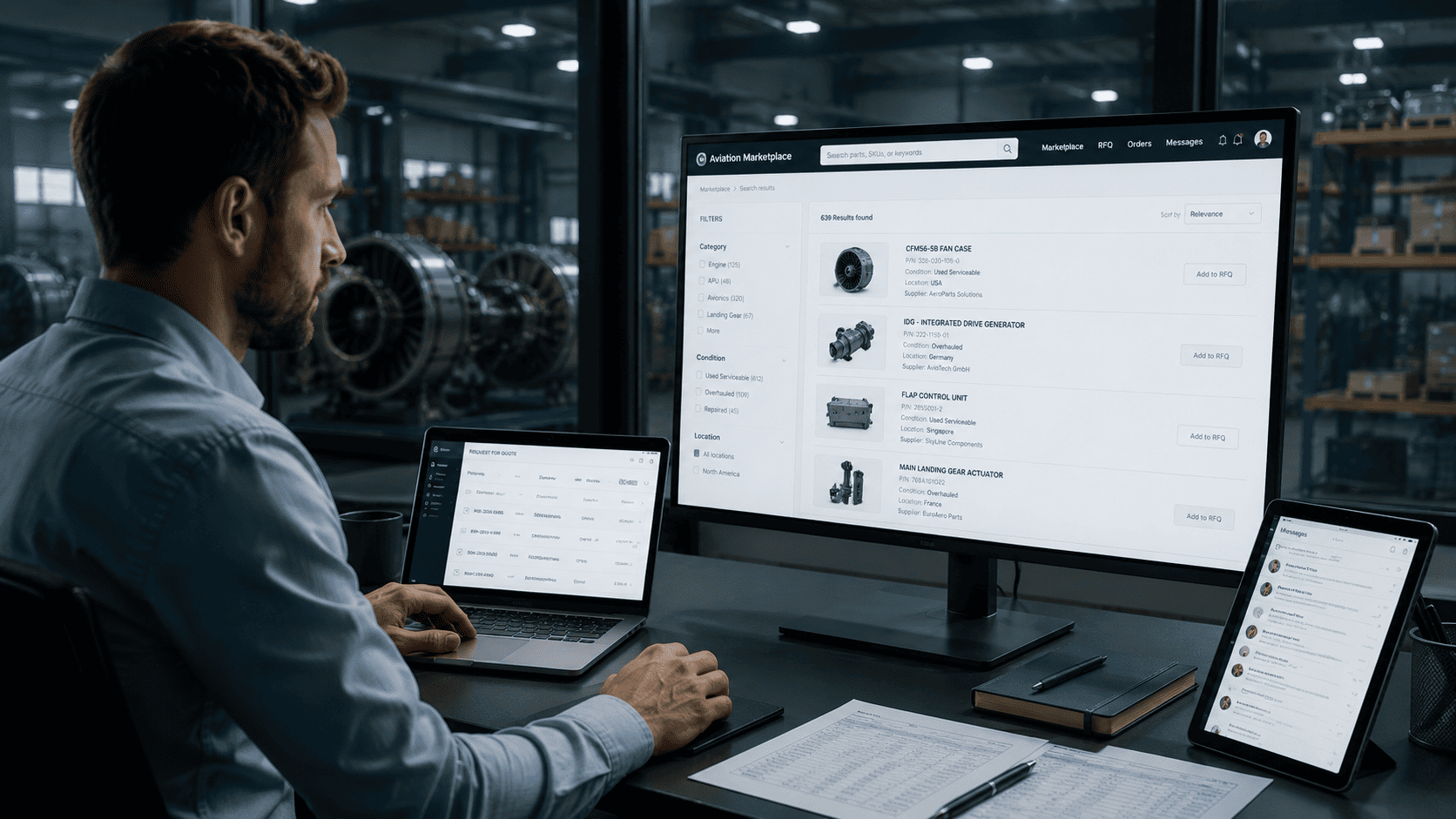
Finding reliable USM can be challenging because inventory is often spread across many suppliers, regions, and systems. Buyers may need to contact multiple companies, compare documentation, request quotes, and verify availability before making a decision.
Digital aviation marketplaces can simplify this process by helping buyers discover available inventory and connect with suppliers more efficiently.
For procurement teams, this can improve:
- Inventory visibility
- Supplier discovery
- RFQ management
- Quote comparison
- Response times
- Sourcing efficiency
For suppliers, marketplaces create an opportunity to make available USM inventory more visible to global buyers.
This is especially useful in a market where speed, documentation, and trust are critical.
When USM Makes the Most Sense
USM is particularly valuable in several situations:
- When OEM lead times are too long
- When new parts are unavailable
- When cost reduction is a priority
- When maintaining older aircraft
- When supporting urgent AOG needs
- When improving sustainability performance
- When reducing waste from retired aircraft
However, USM should always be evaluated carefully. Buyers must consider technical requirements, part condition, documentation, supplier reputation, and regulatory compliance before installation.
A strong USM strategy is not about replacing new parts entirely. It is about adding flexibility to aviation procurement and making smarter sourcing decisions.
Conclusion
Used Serviceable Material is becoming an important part of the aviation aftermarket. As airlines and MRO providers face aircraft parts shortages, long OEM lead times, and rising maintenance costs, USM offers a practical way to improve availability and reduce procurement pressure.
At the same time, USM supports a more sustainable aviation supply chain by extending the life of certified aircraft components and reducing unnecessary waste.
For aviation companies, the opportunity is clear: USM can help balance cost, availability, compliance, and sustainability. But success depends on careful sourcing, reliable documentation, and trusted supplier relationships.
As the industry continues to move toward more resilient and responsible operations, USM and sustainable aviation parts will play an increasingly important role in the future of aircraft maintenance and procurement.
Source it on Aviatrading
Verified sellers, documentation attached to every listing, and every transaction protected by escrow. You pay only when a deal closes.