
Need a part right now? Submit an RFQ on Aviatrading and reach verified sellers worldwide.
Introduction
Aviation is becoming more digital, connected, and data-driven than ever before. Airlines, MRO providers, airports, suppliers, and aircraft operators now rely on digital systems for almost every part of their operations — from flight planning and aircraft maintenance to inventory management, procurement, passenger services, and supplier communication.
This digital transformation brings major benefits. It helps aviation companies improve efficiency, reduce manual work, increase visibility, and make faster operational decisions. However, it also creates new cybersecurity risks.
As aviation systems become more connected, protecting data, infrastructure, and supplier networks is no longer only an IT concern. Cybersecurity has become a critical part of aviation safety, operational reliability, and supply chain resilience.
In 2026, aviation organizations must treat cybersecurity as a core business priority. A single vulnerability in a connected system, supplier platform, or operational workflow can create delays, expose sensitive data, disrupt maintenance, or affect the reliability of critical aviation processes.

Why Cybersecurity Matters in Modern Aviation
The aviation industry depends on trust, precision, and continuity. Every process must be reliable, traceable, and secure.
Modern aviation operations use a wide range of digital systems, including:
- Aircraft maintenance platforms
- Inventory and procurement systems
- Supplier portals
- Flight operations software
- Airport management systems
- Communication networks
- Passenger and cargo systems
- Financial and compliance platforms
These systems often exchange data across multiple organizations, countries, and service providers. This makes aviation highly efficient, but also increases exposure to cyber threats.
Cybersecurity in aviation is not only about preventing data theft. It is also about protecting operational continuity. If a system becomes unavailable, corrupted, or compromised, the consequences can affect maintenance planning, parts sourcing, logistics, flight schedules, and customer service.
Source it on Aviatrading
Verified sellers, documentation attached to every listing, and every transaction protected by escrow. You pay only when a deal closes.
Risks in Connected Aircraft Systems
Aircraft and aviation operations are increasingly supported by connected technologies. While critical aircraft systems are designed with strict safety and security requirements, the broader aviation environment includes many connected components and data flows.
Risks may appear in areas such as:
- Data transmission between aircraft and ground systems
- Maintenance data platforms
- Electronic flight bags
- Connected cabin systems
- Software updates
- Diagnostic tools
- Third-party service integrations
The more systems communicate with each other, the more important it becomes to control access, monitor activity, and protect data integrity.
For example, maintenance teams rely on accurate digital records to make decisions about inspections, repairs, and part replacements. If this information is incomplete, delayed, or manipulated, it can create operational risk.
Similarly, connected tools used by pilots, engineers, and ground teams must be protected from unauthorized access and data loss.
The goal is not to slow down digital transformation. The goal is to make sure connected aviation systems remain reliable, secure, and properly managed.
Supplier Security and Third-Party Risk
Aviation is built on complex supplier relationships. Airlines and MRO providers work with OEMs, parts distributors, repair stations, logistics companies, software providers, brokers, and marketplace platforms.
This creates a broad digital supply chain. Even if an aviation company has strong internal cybersecurity controls, it may still be exposed to risks through external partners.
Supplier-related cybersecurity risks may include:
- Weak access controls
- Unsecured supplier portals
- Poor data handling practices
- Compromised email communication
- Fake invoices or payment fraud
- Unauthorized changes to documentation
- Vulnerabilities in third-party software
- Lack of visibility into supplier security practices
For aviation procurement teams, supplier security is especially important. Buyers often exchange sensitive information such as part numbers, pricing, certificates, company documents, RFQs, invoices, and logistics details.
If supplier communication is not secure, companies may face financial fraud, data leaks, delayed orders, or compliance issues.
This is why aviation organizations should evaluate not only supplier pricing and availability, but also supplier reliability, documentation standards, and digital security practices.
Digital Aviation Operations: Efficiency and Exposure
Digital aviation operations help companies move faster. Procurement teams can search inventory online, submit RFQs, compare offers, manage orders, and communicate with suppliers more efficiently than through manual processes alone.
MRO teams can track maintenance tasks, monitor component history, and access technical documentation. Airlines can manage schedules, crew planning, passenger systems, and operational data in real time.
However, this efficiency depends on secure digital infrastructure.
If digital systems are poorly protected, aviation companies may face:
- System downtime
- Data loss
- Unauthorized access
- Operational delays
- Compliance issues
- Payment fraud
- Disrupted supplier communication
- Reduced trust between partners
In a highly time-sensitive industry, even temporary system disruption can create serious consequences. For example, if a procurement platform becomes unavailable during an urgent AOG situation, sourcing may slow down at the exact moment when speed matters most.
Cybersecurity therefore supports operational performance. Secure systems help teams work faster with more confidence.
Common Cybersecurity Challenges in Aviation
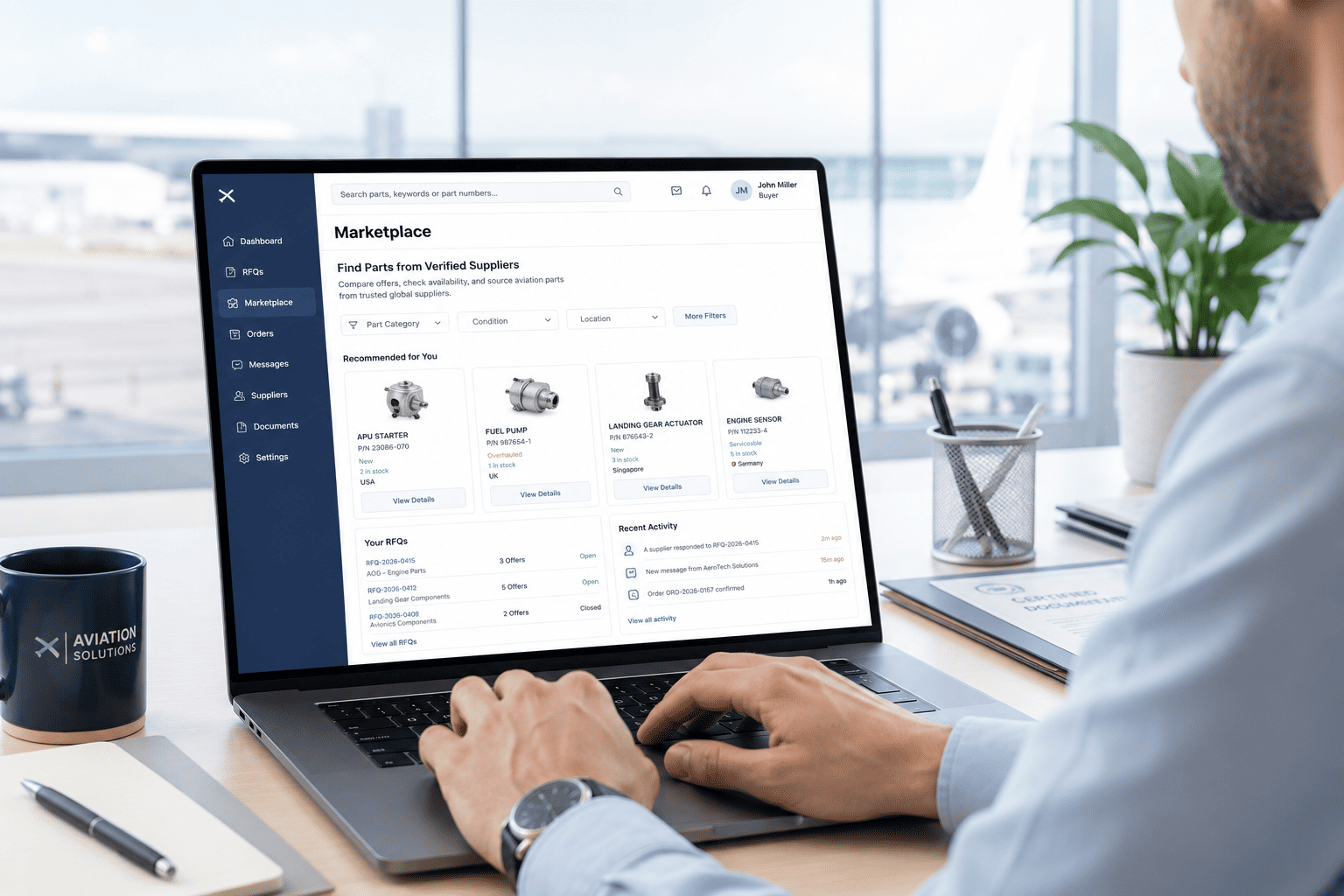
Many aviation companies face similar cybersecurity challenges as they become more digital.
Legacy Systems
Some aviation systems were not originally designed for today’s connected environment. Integrating older platforms with modern tools can create security gaps if not managed carefully.
Human Error
Employees may accidentally click malicious links, share sensitive information, or use weak passwords. Training and clear procedures remain essential.
Complex Vendor Networks
Aviation companies often work with many third parties. Managing access, permissions, and data sharing across this ecosystem can be difficult.
Data Fragmentation
Operational data may be spread across multiple systems, making it harder to monitor risks and maintain consistent security practices.
Increasing Regulatory Pressure
Aviation authorities are placing greater emphasis on cybersecurity, information security management, and risk-based controls.
Best Practices for Stronger Aviation Cybersecurity
To reduce risk, aviation organizations should treat cybersecurity as part of their operational strategy.
Key practices include:
Strengthening Access Control
Only authorized users should have access to sensitive systems and data. Multi-factor authentication, role-based permissions, and regular access reviews can reduce risk.
Securing Supplier Communication
Procurement and supplier communication should happen through trusted channels. Companies should be alert to invoice fraud, fake supplier messages, and suspicious payment requests.
Verifying Digital Documentation
Aircraft parts documentation, certificates, and maintenance records must remain accurate and traceable. Digital document workflows should include verification and secure storage.
Training Employees
Cybersecurity is not only a technical issue. Employees across procurement, maintenance, operations, and finance should understand common risks and warning signs.
Monitoring Systems Continuously
Aviation companies should monitor unusual activity, system performance, and potential threats to detect issues early.
Building Incident Response Plans
Organizations need clear procedures for responding to cyber incidents. This includes communication, containment, recovery, and business continuity planning.
Evaluating Supplier Security
Supplier onboarding should include checks for reliability, documentation quality, and digital security standards.
The Role of Digital Marketplaces
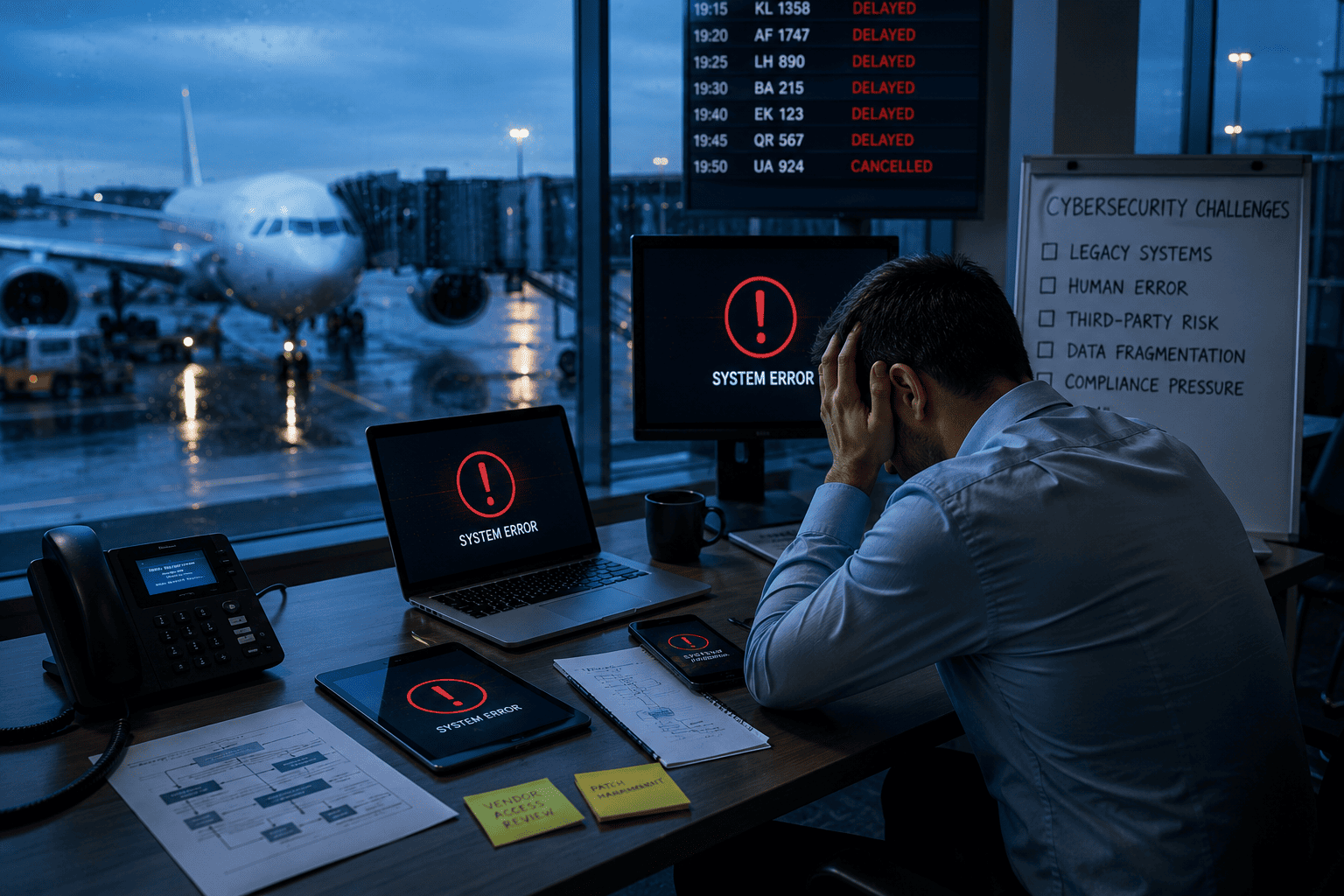
Digital aviation marketplaces can support more efficient and secure procurement when they are designed with transparency, traceability, and structured communication in mind.
Instead of relying only on fragmented email chains and manual supplier searches, buyers can use digital platforms to organize sourcing activity, compare supplier responses, and manage RFQs more clearly.
This can help reduce operational confusion and improve visibility across the procurement process.
For suppliers, digital platforms provide a more structured way to present inventory, respond to requests, and build trust with buyers.
However, marketplaces must also maintain strong security practices. Since they connect multiple participants in the aviation supply chain, protecting user accounts, business data, and transaction-related communication is essential.
Cybersecurity as a Competitive Advantage
In 2026, cybersecurity is becoming more than a defensive requirement. It is also a competitive advantage.
Aviation companies that invest in secure digital operations can build stronger relationships with customers, suppliers, and partners. They can reduce operational risk, protect sensitive data, and respond more effectively to disruptions.
Strong cybersecurity also supports trust. In aviation, trust is essential — whether a company is sourcing parts, managing maintenance, handling documentation, or coordinating logistics.
Organizations that demonstrate reliable digital practices are better positioned to operate in a more connected and regulated environment.
Looking Ahead
The aviation industry will continue to become more digital. Connected systems, automation, data platforms, AI-assisted operations, and digital procurement tools will continue to shape how companies work.
This evolution will bring new opportunities, but also new responsibilities.
Aviation organizations must ensure that digital transformation is supported by secure infrastructure, clear governance, supplier awareness, and strong risk management.
Cybersecurity should not be treated as a separate technical function. It should be integrated into daily aviation operations, procurement workflows, supplier management, and long-term business planning.
Conclusion
Aviation cybersecurity is now a critical part of modern industry operations. As aircraft systems, procurement platforms, supplier networks, and operational tools become more connected, companies must protect both their data and their ability to operate reliably.
The main challenge is not digitalization itself. Digital systems make aviation faster, smarter, and more efficient. The challenge is ensuring that these systems remain secure, resilient, and trustworthy.
In 2026, aviation companies that prioritize cybersecurity will be better prepared to manage risks, protect supplier relationships, maintain operational continuity, and support the future of connected aviation.
Related: our calendar of key aviation trade shows in 2026 lists where these questions get discussed in person.
Source it on Aviatrading
Verified sellers, documentation attached to every listing, and every transaction protected by escrow. You pay only when a deal closes.