
Need a part right now? Submit an RFQ on Aviatrading and reach verified sellers worldwide.
Why the Aircraft Parts Supply Chain Matters More Than Ever
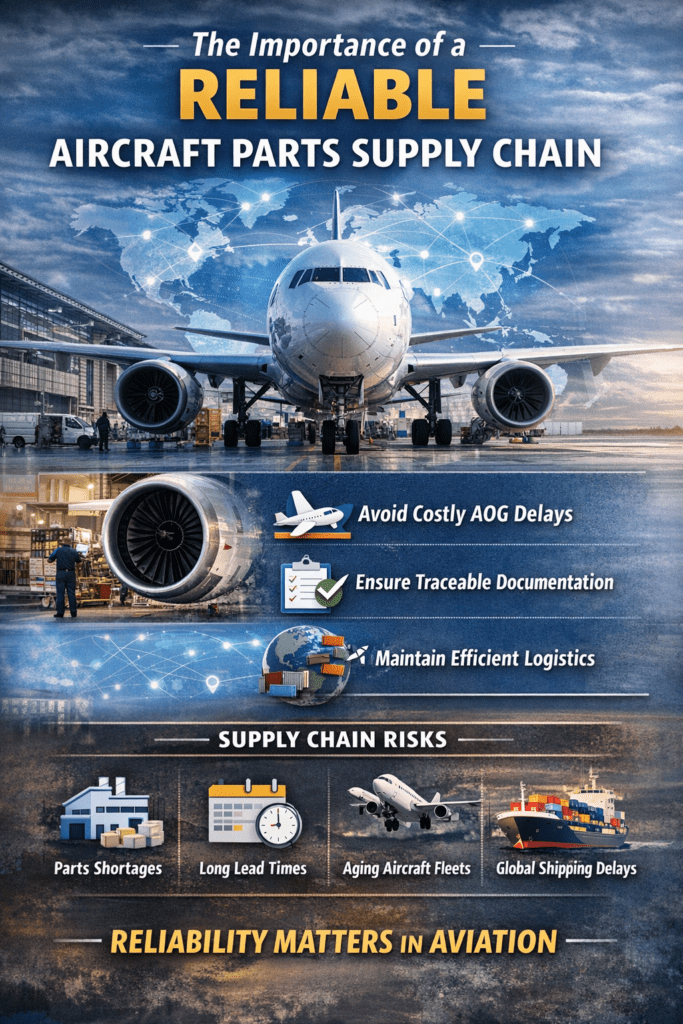
In aviation, there is no room for uncertainty. Every aircraft in the sky depends on thousands of components working perfectly together. Behind every safe flight is a complex aircraft parts supply chain that ensures the right part is available at the right time — with the right certification.
When this system works smoothly, airlines, MROs, and operators function efficiently. But when it fails, the consequences are immediate and expensive. Delays in sourcing parts can lead to Aircraft on Ground (AOG) situations, operational disruption, and serious financial losses.
In today’s global aviation aftermarket, supply chain reliability is no longer just a competitive advantage — it is a necessity.
What Is an Aircraft Parts Supply Chain?
An aircraft parts supply chain is the complete network involved in sourcing, storing, transporting, and delivering aviation components. This includes:
-
OEM manufacturers (Original Equipment Manufacturers)
-
Aftermarket suppliers
-
Aircraft parts distributors
-
MRO providers (Maintenance, Repair, and Overhaul)
-
Logistics providers
-
Warehousing and inventory management systems
-
Aviation parts marketplaces
Each link in this chain plays a critical role. If one element fails — whether due to inventory shortages, documentation issues, or shipping delays — the entire operation can slow down.
The aviation supply chain is unique because it operates under strict regulatory compliance and safety standards. Unlike other industries, you cannot simply substitute parts without proper certification and traceability.
Source it on Aviatrading
Verified sellers, documentation attached to every listing, and every transaction protected by escrow. You pay only when a deal closes.
Why Stock Reliability Is Critical in Aviation
1. Preventing Aircraft on Ground (AOG) Situations
An AOG situation happens when an aircraft cannot fly because it is waiting for a specific component. Every hour of AOG can cost operators thousands of dollars in lost revenue, crew rescheduling, and passenger disruption.
Reliable stock availability helps prevent these costly disruptions. When suppliers maintain real-time inventory visibility and accurate stock data, operators can quickly source critical spare parts.
LSI keywords naturally included:
-
AOG support services
-
urgent aircraft parts
-
aviation spare parts availability
-
critical aircraft components
-
emergency parts sourcing
Without reliable inventory management, even a small missing component can stop an entire aircraft from operating.
2. Supporting Efficient Maintenance Operations
Maintenance teams rely on consistent access to:
-
Rotables
-
Expendables
-
Consumables
-
Engine components
-
Avionics parts
-
Landing gear parts
If stock is unreliable, maintenance schedules get delayed. This impacts aircraft turnaround time, hangar planning, and fleet utilization.
An optimized aviation supply chain ensures that MRO facilities can plan inspections, repairs, and overhauls without unnecessary waiting.
3. Managing Global Fleet Demand
Modern fleets operate worldwide. Airlines may require parts in North America, Europe, the Middle East, or Asia within hours.
A reliable global aircraft parts distribution network allows suppliers to respond quickly across different time zones and regions.
This includes:
-
Strategic warehouse locations
-
International freight forwarding
-
Customs clearance expertise
-
Time-critical logistics solutions
Global availability reduces downtime and keeps fleets moving.
The Role of Trace Documentation in Aviation Safety
In aviation, having the part is not enough. It must also come with complete trace documentation.
Traceability ensures that every component:
-
Meets regulatory standards
-
Has approved certification (FAA, EASA, etc.)
-
Includes proper release documentation (e.g., 8130-3 or EASA Form 1)
-
Has a clear maintenance history
Why Traceability Matters
Without proper documentation, parts cannot be installed. Even if the component is physically available, missing paperwork makes it unusable.
LSI keywords included:
-
aircraft parts traceability
-
aviation compliance standards
-
certified aircraft components
-
airworthiness documentation
-
FAA approved parts
-
EASA certification
-
aviation quality assurance
Trace documentation protects operators from:
-
Safety risks
-
Regulatory penalties
-
Insurance complications
-
Reputational damage
A reliable supply chain integrates documentation management into every transaction.

The Real Cost of Supply Chain Delays
When the aircraft parts supply chain breaks down, the financial impact spreads quickly.
1. Direct Financial Loss
A grounded aircraft generates no revenue. Instead, it accumulates:
-
Crew costs
-
Airport fees
-
Passenger compensation
-
Hotel and rebooking expenses
The cost of downtime often far exceeds the price of the part itself.
2. Operational Disruption
Delays affect:
-
Flight schedules
-
Maintenance planning
-
Fleet rotation
-
Cargo operations
One delayed component can disrupt an entire network.
3. Customer Trust and Brand Impact
Passengers and cargo clients expect reliability. Frequent operational disruptions damage brand reputation and long-term customer loyalty.
In a competitive aviation market, operational reliability equals business survival.
Common Challenges in the Aviation Supply Chain
Even experienced operators face supply chain challenges, including:
• Global Parts Shortages
Manufacturing backlogs and material shortages can limit OEM production capacity.
• Long Lead Times
Some aircraft components have lead times of several months.
• Aging Aircraft Fleets
Older aircraft require hard-to-find parts, increasing dependence on aftermarket suppliers and USM (Used Serviceable Material).
• Regulatory Complexity
Different aviation authorities enforce strict standards that must be followed across borders.
• Logistics Bottlenecks
International shipping disruptions can delay urgent deliveries.
A resilient supply chain strategy anticipates these risks and builds redundancy.
The Growing Importance of the Aviation Aftermarket
The aviation aftermarket industry plays a major role in supply chain stability.
With rising demand for cost efficiency, operators increasingly rely on:
-
Used Serviceable Material (USM)
-
Overhauled components
-
Surplus aircraft parts
-
End-of-life aircraft teardown programs
Aftermarket suppliers provide cost-effective alternatives while maintaining airworthiness standards.
LSI keywords included:
-
aviation aftermarket parts
-
USM aircraft components
-
surplus aircraft inventory
-
aircraft teardown parts
-
MRO supply chain solutions
A strong aftermarket ecosystem reduces dependence on OEM-only sourcing.
Best Practices for Building a Reliable Aircraft Parts Supply Chain
1. Real-Time Inventory Management
Digital platforms and aviation parts marketplaces allow buyers to access live stock availability.
Real-time systems reduce sourcing time and increase transparency.
2. Strategic Supplier Partnerships
Long-term relationships with trusted suppliers ensure priority access during high-demand periods.
Look for suppliers who offer:
-
Proven compliance history
-
Strong AOG support
-
Global shipping capability
-
Transparent pricing
3. Diversified Sourcing Strategy
Relying on a single source increases risk. A balanced strategy includes:
-
OEM parts
-
Aftermarket suppliers
-
Global distributors
-
Marketplace sourcing
Diversification improves resilience.
4. Strong Documentation Control
Digital document storage systems help track:
-
Certificates
-
Repair history
-
Inspection records
-
Traceability chain
Automation reduces paperwork errors and speeds up compliance verification.
5. Investment in Logistics Excellence
Time-critical logistics providers specialized in aviation ensure rapid delivery worldwide.
This includes:
-
Next-flight-out services
-
Express air freight
-
Dedicated courier solutions
Speed matters in aviation operations.
How Digital Marketplaces Improve Supply Chain Reliability
Online aviation platforms are transforming the way buyers and sellers connect.
Digital marketplaces provide:
-
Transparent pricing
-
Global supplier access
-
Faster RFQ responses
-
Verified seller networks
-
Centralized documentation
This improves efficiency in aircraft parts procurement and strengthens the entire supply chain.
Technology is reducing manual processes and enabling smarter sourcing decisions.

Conclusion: Reliability Is the Foundation of Aviation Operations
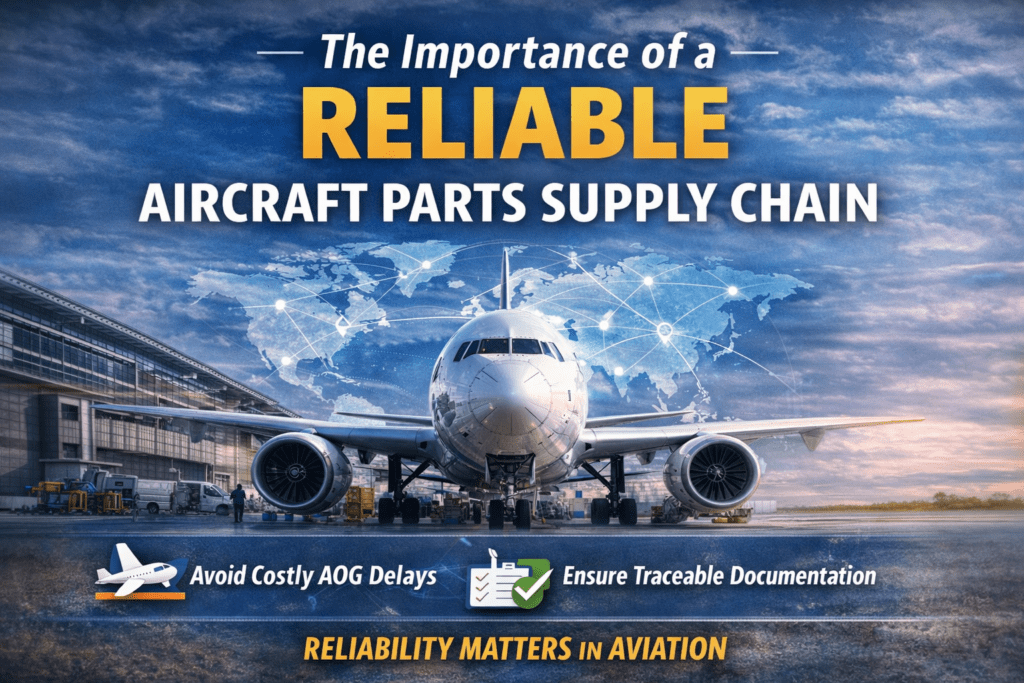
A reliable aircraft parts supply chain is not just about moving components from point A to point B. It is about safety, compliance, operational efficiency, and financial stability.
Stock reliability prevents costly AOG events.
Trace documentation ensures airworthiness.
Efficient logistics minimize downtime.
In aviation, delays are expensive — but prevention is strategic.
Operators, MROs, and suppliers who invest in resilient supply chain strategies protect not only their revenue but also their reputation and long-term growth.
In a world where every minute counts, reliability is everything.
Source it on Aviatrading
Verified sellers, documentation attached to every listing, and every transaction protected by escrow. You pay only when a deal closes.